
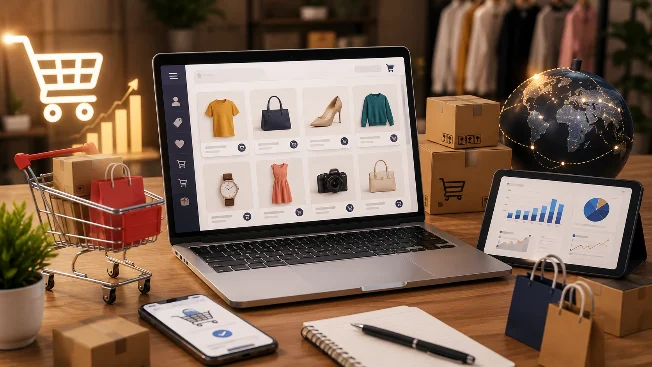
Most "start your own brand" content online is inspiration, not instruction. It skips the unglamorous middle — supplier evaluation, landed-cost maths, GST-compliant checkout, and the exact ad-account setup that makes tracking work. This guide is the practical version: a complete, honest walkthrough of launching a real direct-to-consumer e-commerce brand in India in 2026, from idea to your first genuine paid order.
Why D2C is a real opportunity in India right now
India's combination of cheap data, widespread UPI payments, maturing logistics and a growing online-shopping habit has made it genuinely possible for a small team — or one determined founder — to build a product brand that reaches customers directly, without a retailer in between. The opportunity is real, but so is the failure rate, and the difference almost always comes down to execution of the unglamorous fundamentals.
The steps that actually decide success
- Market and niche research using real trend and competitor data, not vibes
- Supplier evaluation, unit economics and landed-cost calculation
- Brand foundations: naming, positioning and visual identity
- Building a Shopify store correctly — theme, GST invoicing, Razorpay and COD
- Meta Ads with server-side Conversions API for tracking that survives privacy changes
- Fulfilment and logistics (Shiprocket, Delhivery)
- WhatsApp and email retention flows so you profit from repeat buyers
Unit economics: the maths most founders skip
A brand lives or dies on unit economics — what it truly costs to source, ship and acquire a customer versus what that customer pays and how often they return. Many first-time founders fall in love with a product and never do this maths, then wonder why growth burns cash. Learning to calculate landed cost, contribution margin and customer acquisition cost before you scale is the single most important commercial skill in e-commerce.
Why Conversions API matters now
Browser-only ad tracking has become unreliable since platform privacy changes. Server-side Conversions API (CAPI) is now the standard way serious D2C brands track ad performance accurately. Any guide or course that skips this is teaching an outdated setup that will quietly waste your ad budget.
What "done" actually looks like
Not a business plan document — a live Shopify store, with a configured ad account, that has taken at least one real payment. That is the honest bar. A brand that exists only as a deck has not been tested against a single real customer; a store that has taken one real order has crossed the line from idea to business.
A roadmap to your first paid order
- Research a niche with real demand and manageable competition
- Source a product and calculate honest unit economics
- Build brand identity and a conversion-ready Shopify store
- Set up payments (Razorpay, COD) and GST-compliant invoicing
- Configure Meta Pixel and server-side CAPI
- Run a small, measured ad test and get your first orders
- Set up logistics and WhatsApp/email retention, then document a 90-day growth plan
Who this is for
Aspiring founders, side-hustlers and existing small-business owners who want to sell directly online. You will need a small budget for product samples and initial ad testing, but the course teaches you to keep that minimal and validate before scaling.
Delivered as a live online cohort, ecompreneurship and D2C brand building reaches learners across Delhi NCR, Mumbai, Bengaluru, Chennai, Hyderabad, Kolkata, Pune, Ahmedabad, Jaipur, Lucknow, Indore, Nagpur, Coimbatore, Kochi and every Tier-2 and Tier-3 city in India. Whether you are in Roorkee, Mathura, Jhansi, Madurai or Cuttack, you join the same live session, with the same mentor and the same project standard, as someone in Mumbai or Bengaluru — access that local institutes in smaller cities simply cannot match.
Start with a free session
The lowest-risk first step is a free live masterclass in building a D2C e-commerce brand — a real 60–90 minute session with a working mentor, not a sales pitch, so you can judge the depth and teaching quality yourself. If it fits, join the Ecompreneurship cohort and, for a limited time, unlock 50% off on both one-time and No-Cost EMI plans.
Freshers, career-switchers and learners in smaller cities without local access all begin the same way — book a free seat, attend one genuine session, and decide from evidence.